Gear
Portable Power Stations
Core job: storing watt-hours and giving them back as household AC
A power station is a battery, an inverter, and a row of sockets in one case. You charge it while the power is on and spend it while the power is off. Nothing else about the category matters as much as those two sentences, and most of the confusion in this aisle comes from listings implying more.
No solar panel is included with any unit in this catalog, and this site does not sell solar panels. Where a listing uses the phrase solar generator, that describes a battery with a solar input port; the panel is optional and sold separately, and the listings say so. There are also no fuel-burning generators here. Every unit on this page is a lithium battery.
What this category solves
- Keeps phones, a router, lamps, and a laptop alive through an outage without anything burning fuel indoors.
- Gives you a wall outlet in a room that has none, or on a table in the yard, without running a cord across the house.
- Covers the specific gap that a phone bank cannot: things that need a household AC plug rather than USB.
- On the larger units, carries a fridge for part of a day so the food inside survives a long event.
How to choose
| Factor | What to look for | Why it matters |
|---|---|---|
| Rated watt-hours | A capacity stated in Wh, not only in mAh | Watt-hours divide directly by your load in watts to give hours. A mAh figure without a voltage cannot. |
| Continuous AC output | A continuous wattage, listed separately from any peak figure | Continuous output decides what you can run at all. A peak number quoted alone tells you almost nothing. |
| Cell chemistry | LiFePO4 stated on the listing | Chemistry is tied to how many charge cycles the manufacturer rates the pack for, which matters for a unit that sits for years. |
| Weight and handles | Something you can actually carry up basement stairs | A unit too heavy to move ends up parked in one room, which is not where the outage inconveniences you. |
| Recharge path | Wall charge time stated by the manufacturer | With no solar panels in this catalog, the wall is how you refill it, and a slow charger changes your options between storms. |
| USB-C wattage | A stated USB-C output figure | Most of what you charge in an outage is USB-C, and going through the AC inverter to reach a wall brick wastes energy. |
The lineup
Nothing on this page has been tested by this site. Every specification is what the listing states, and where a listing states nothing, this page says so rather than filling the gap. There are no prices and no ratings here.
1000 Wh and up
Two-handed units. This is where a fridge becomes a realistic load rather than a hopeful one.
Highest stated AC output here, 1800 W
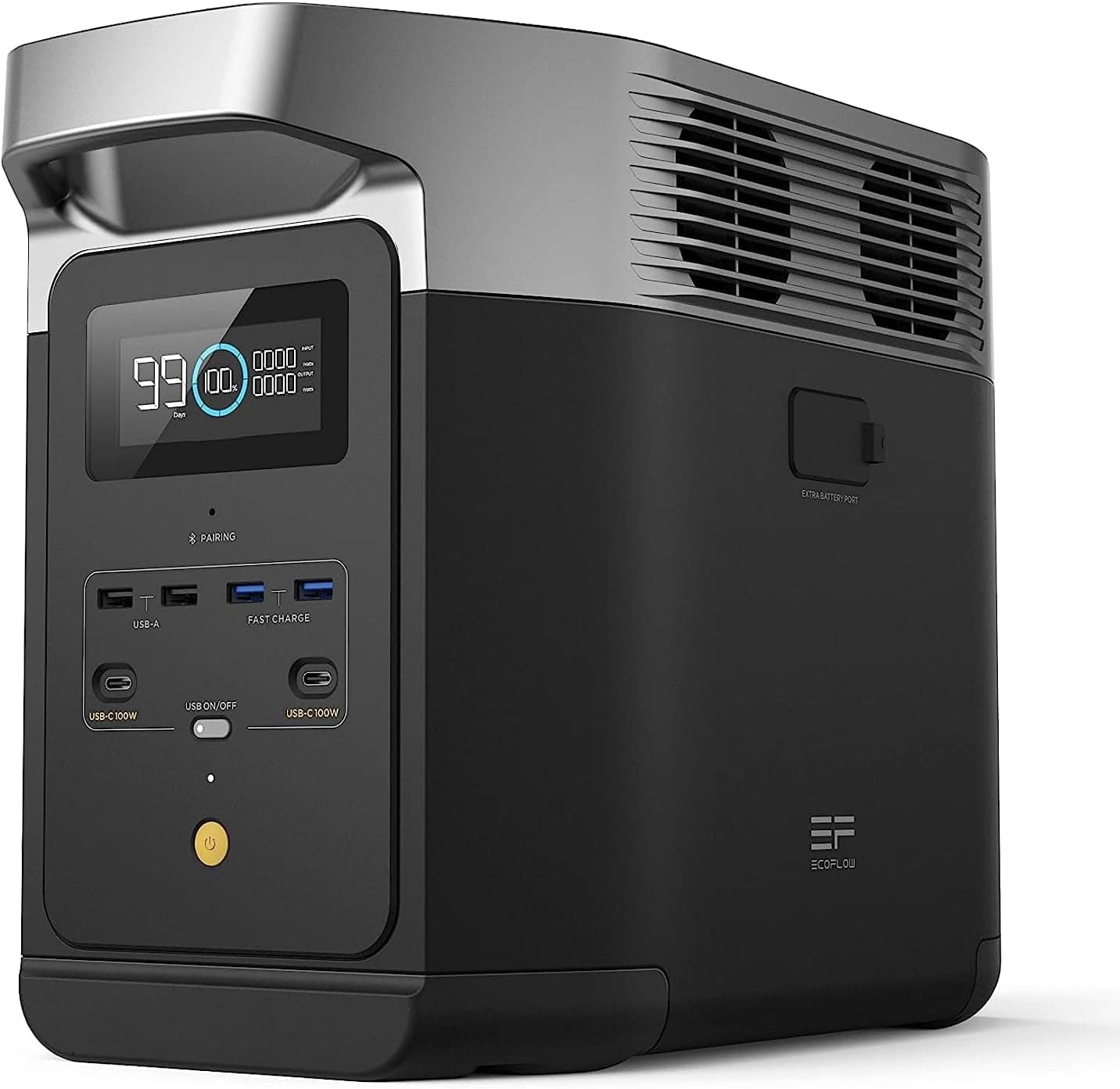
EcoFlow Delta 2 Power Station, 1024 Wh
The listing states 1024 Wh of LiFePO4 storage behind an 1800 W AC output, which is the highest continuous figure stated by any unit in this catalog. That combination is what the category is for: a large reserve of watt-hours and an inverter big enough to hand them back through a household plug. The listing states the solar panel is optional and sold separately, and no panel is included here.
- Stated capacity
- 1024 Wh
- Stated AC output
- 1800 W
- Stated USB-C output
- 100 W
- Chemistry, as the listing states
- LiFePO4
- Solar panel
- Optional and sold separately, per the listing
What it does well
- The listing states the highest continuous AC output in this catalog at 1800 W, which is what decides whether a load runs at all.
- The listing states LiFePO4 cells, the chemistry associated with longer rated cycle life on units that sit unused for years.
- The listing states a 100 W USB-C port, so laptops and phones can be charged without routing through the AC inverter.
- A stated 1024 Wh reserve is enough to put a fridge on the list of things you can consider, rather than only lights and phones.
Where it falls short
- No solar panel is included, and none is sold on this site, so the wall outlet is the only recharge path covered here.
- The listing does not state a peak or surge figure separately from the 1800 W continuous output, so motor starting headroom is unstated.
- At this capacity the unit is a two-handed carry, which limits how casually it moves between floors.
Best forThe household that has already handled lights and phones and now wants the fridge to survive a long night.
Largest stated capacity here, 1070 Wh
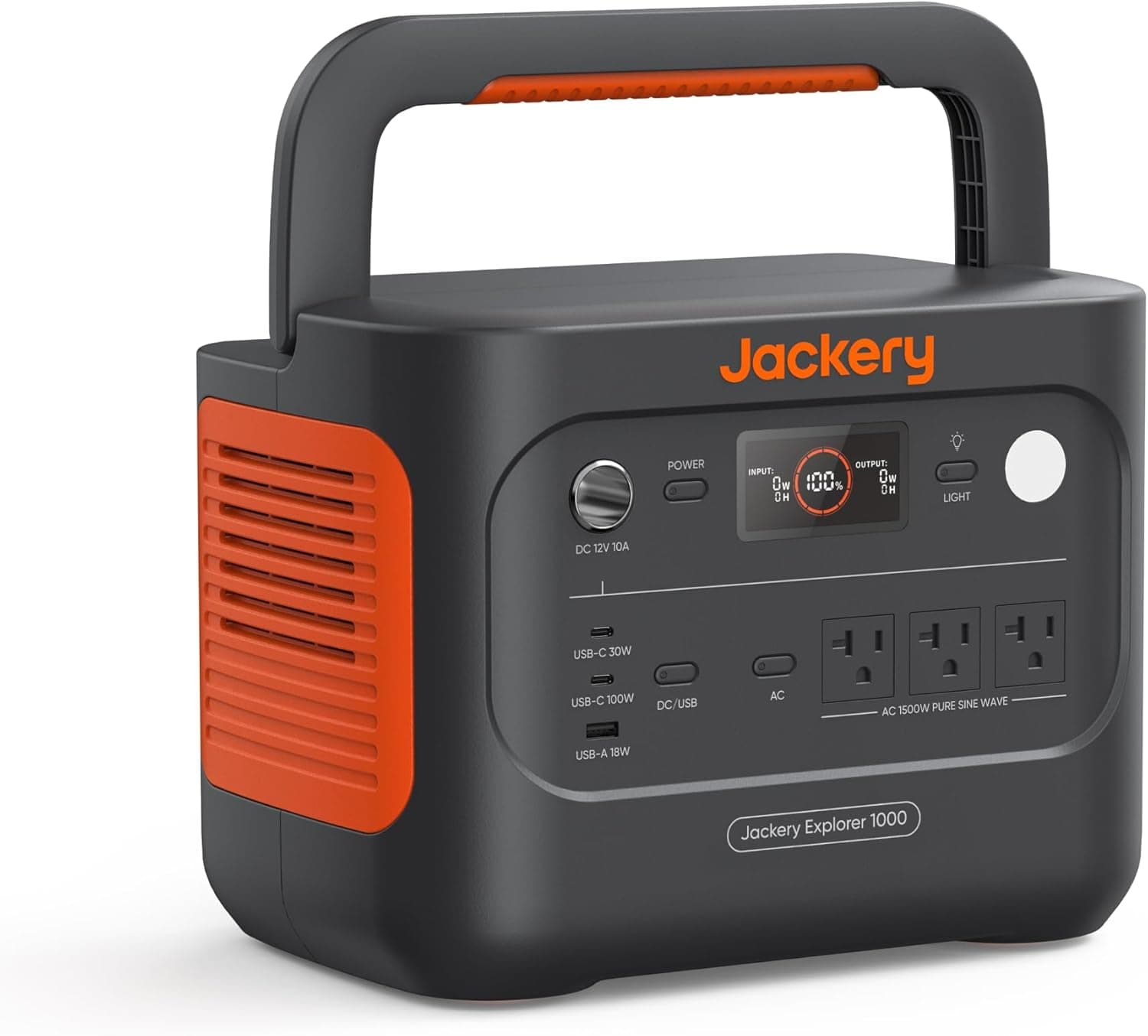
Jackery Explorer 1000 v2, 1070 Wh
The listing states 1070 Wh, the largest stated capacity in this catalog, paired with a 1500 W output and LiFePO4 cells. The stated one-hour fast charge is the feature worth noticing here, because between two storms in the same week the question is not how much the unit holds but how quickly it refills. The listing states the solar panel is optional.
- Stated capacity
- 1070 Wh
- Stated AC output
- 1500 W
- Stated recharge
- One-hour fast charge
- Stated USB-C output
- 100 W
- Chemistry, as the listing states
- LiFePO4
What it does well
- The listing states the largest capacity in this catalog at 1070 Wh, which is the figure hour estimates divide from.
- The listing states a one-hour fast charge from the wall, which matters when outages arrive in clusters.
- The listing states LiFePO4 cells, associated with longer rated cycle life for a unit that mostly sits.
- A stated 100 W USB-C port covers laptop charging without going through the AC inverter.
Where it falls short
- The stated 1500 W output is below the 1800 W stated by the other large unit here, which narrows what will start.
- No solar panel is included, and this site sells none, so recharging means a wall outlet.
- The listing states no separate peak figure, so surge headroom for motor loads is not published.
Best forSomeone in a region where outages come in runs, who needs the unit back to full between events.
| Product | Stated capacity | Stated AC output |
|---|---|---|
| EcoFlow Delta 2 Power Station, 1024 Wh | 1024 Wh | 1800 W |
| Jackery Explorer 1000 v2, 1070 Wh | 1070 Wh | 1500 W |
1000 Wh and up, as the listings state
EcoFlow Delta 2 Power Station, 1024 Wh
- Stated capacity
- 1024 Wh
- Stated AC output
- 1800 W
Jackery Explorer 1000 v2, 1070 Wh
- Stated capacity
- 1070 Wh
- Stated AC output
- 1500 W
Under 300 Wh
Carry-anywhere units for phones, lights, a router, and a laptop. No motors, no heat.
Highest stated output under 300 Wh, 300 W
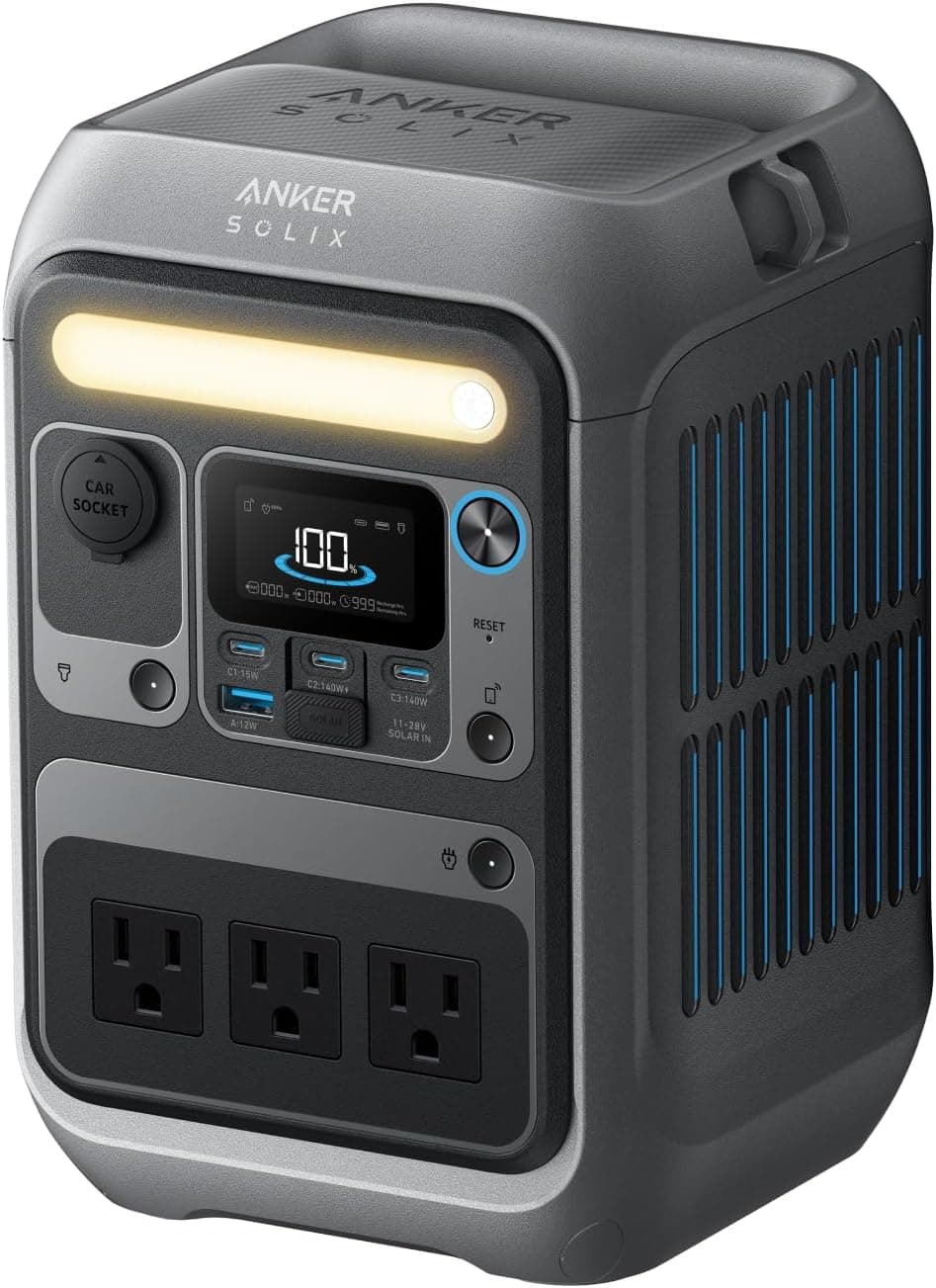
Anker SOLIX C300, 288 Wh
The listing states 288 Wh of LiFePO4 storage with a 300 W output, which is the highest stated output among the small units here. Two-way 140 W fast charging is stated, meaning the unit both refills and delivers quickly for its size. This is a desk-sized reserve for a router, a laptop, and lights, not for anything that heats or spins.
- Stated capacity
- 288 Wh
- Stated AC output
- 300 W
- Stated charging
- 140 W two-way fast charging
- Chemistry, as the listing states
- LiFePO4
- Solar panel
- Optional, per the listing
What it does well
- The listing states a 300 W output, the highest among the sub-300 Wh units in this catalog.
- The listing states LiFePO4 cells rather than the chemistry more common at this size.
- Stated 140 W two-way fast charging means a short window on a wall outlet puts a useful amount back.
- Small enough to move room to room without planning the trip.
Where it falls short
- A stated 288 Wh reserve puts a fridge out of reach; this is a phones, router, and lights unit.
- The listing states no separate peak figure, so nothing with a motor should be assumed to start.
- No solar panel is included, and none is sold here.
Best forA first power station for a household that wants the router and the phones covered without a two-handed box.
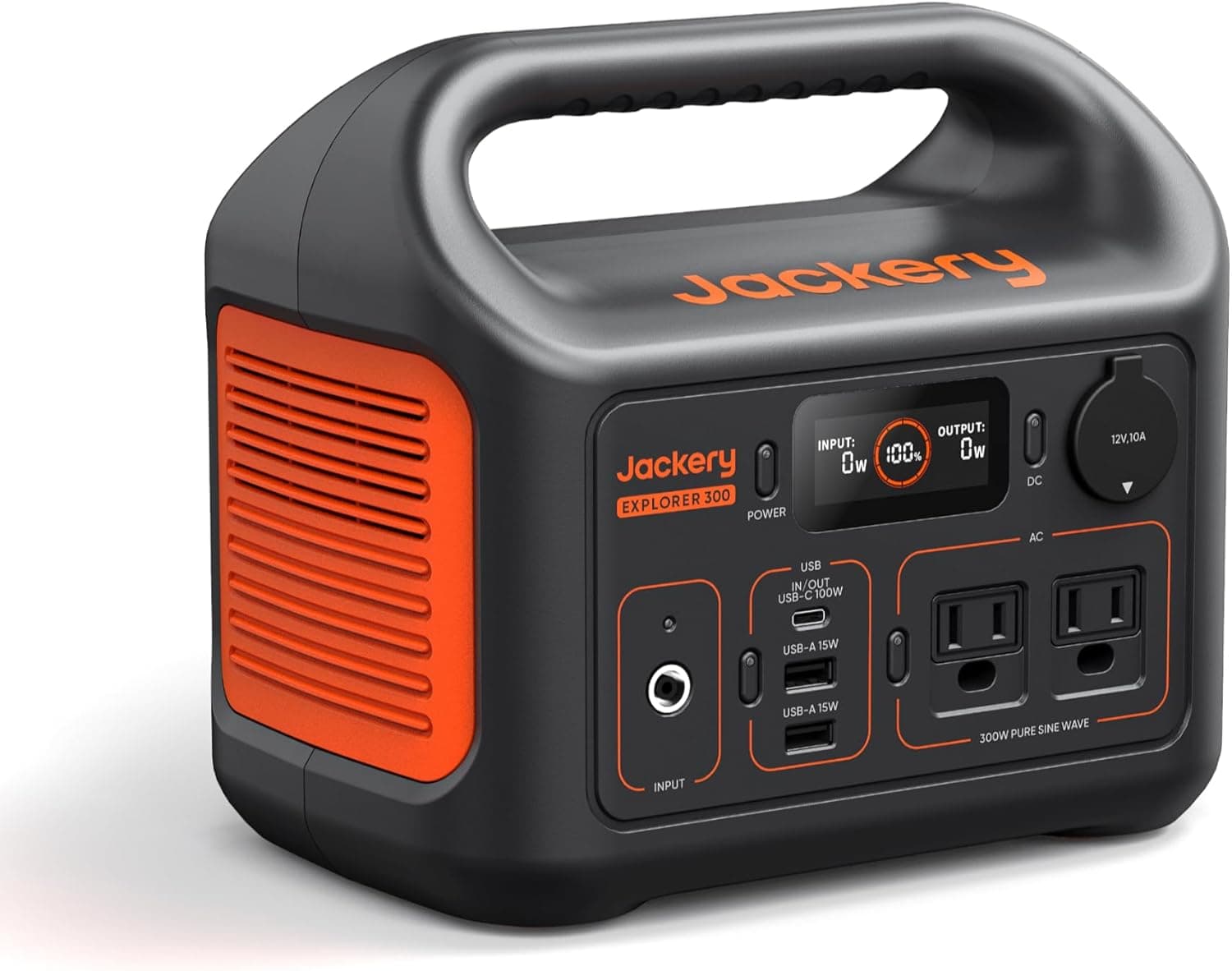
Jackery Explorer 300, 292 Wh
The listing states 292 Wh of LiFePO4 storage, positioned for camping, travel, and blackouts. It is the same size class as the other small unit here, and the difference between them is what the listings choose to state rather than anything visible from outside. The listing states the solar panel is optional.
- Stated capacity
- 292 Wh
- Stated AC output
- Not stated on the listing
- Chemistry, as the listing states
- LiFePO4
- Stated use
- Camping, travel, blackouts
- Solar panel
- Optional, per the listing
What it does well
- A stated 292 Wh is the largest capacity among the sub-300 Wh units in this catalog.
- The listing states LiFePO4 cells, which is the chemistry associated with longer rated cycle life.
- Sized to be carried in one hand, which is what decides whether it gets moved to where the outage is inconvenient.
- The listing positions it for camping and travel as well as blackouts, so it earns its shelf space on ordinary weekends.
Where it falls short
- The listing states no continuous AC output figure, so what it will run has to come from the manual rather than the product page.
- No peak or surge figure is stated either, which leaves motor loads entirely unquantified.
- No solar panel is included, and none is sold on this site.
Best forA household that wants a small reserve that also travels, and is willing to read the manual for the output figures.
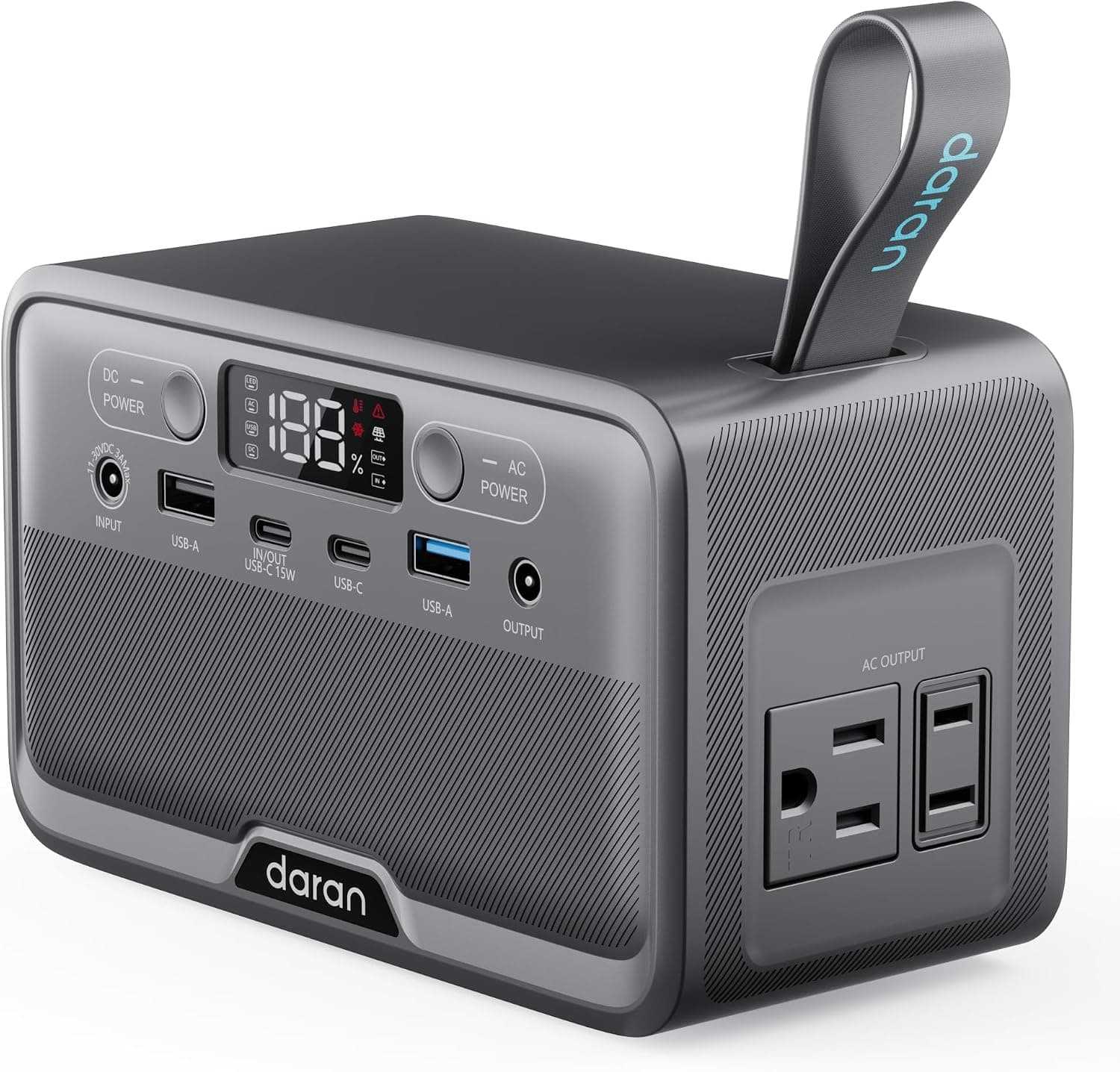
DARAN Power Station, 89.6 Wh
The listing states 89.6 Wh with a 100 W continuous and 200 W peak output, and it is the only unit in this catalog that publishes both figures. That honesty is worth more than the capacity: you know exactly what it will hold and exactly what it will refuse. Treat it as a phone-and-lamp reserve with a household socket attached.
- Stated capacity
- 89.6 Wh
- Stated continuous output
- 100 W
- Stated peak output
- 200 W
- Chemistry, as the listing states
- LiFePO4
- Solar panel
- Optional, per the listing
What it does well
- The listing states both continuous and peak output, 100 W and 200 W, which no other unit here does.
- The listing states LiFePO4 cells at a size where that is not the default.
- AC outlets on a pack this small mean the one device that refuses to charge over USB is still covered.
- PD fast charging is stated, so it refills in the gap between two errands.
Where it falls short
- A stated 89.6 Wh reserve is phones, a lamp, and a router for a while; nothing beyond that.
- The stated 100 W continuous output rules out most household appliances entirely.
- No solar panel is included, and none is sold here.
Best forKeeping phones, a lamp, and a router alive through a short outage, with the limits printed on the box.
| Product | Stated capacity | Stated AC output | Est. hours on a 60 W load |
|---|---|---|---|
| Anker SOLIX C300, 288 Wh | 288 Wh | 300 W | 4.1 h |
| Jackery Explorer 300, 292 Wh | 292 Wh | Not stated | 4.1 h |
| DARAN Power Station, 89.6 Wh | 89.6 Wh | 100 W continuous, 200 W peak | 1.3 h |
Under 300 Wh, as the listings state
Anker SOLIX C300, 288 Wh
- Stated capacity
- 288 Wh
- Stated AC output
- 300 W
- Est. hours on a 60 W load
- 4.1 h
Jackery Explorer 300, 292 Wh
- Stated capacity
- 292 Wh
- Stated AC output
- Not stated
- Est. hours on a 60 W load
- 4.1 h
DARAN Power Station, 89.6 Wh
- Stated capacity
- 89.6 Wh
- Stated AC output
- 100 W continuous, 200 W peak
- Est. hours on a 60 W load
- 1.3 h
Everything in this category, side by side
The hours column divides each stated capacity by a steady 60 W load using the site formula, so the units can be compared on the same basis. It is an estimate, not a guarantee.
| Product | Stated capacity | Stated AC output | Est. hours on a 60 W load |
|---|---|---|---|
| EcoFlow Delta 2 Power Station, 1024 Wh | 1024 Wh | 1800 W | 15 h |
| Jackery Explorer 1000 v2, 1070 Wh | 1070 Wh | 1500 W | 15 h |
| Anker SOLIX C300, 288 Wh | 288 Wh | 300 W | 4.1 h |
| Jackery Explorer 300, 292 Wh | 292 Wh | Not stated | 4.1 h |
| DARAN Power Station, 89.6 Wh | 89.6 Wh | 100 W continuous, 200 W peak | 1.3 h |
Portable Power Stations, all products
EcoFlow Delta 2 Power Station, 1024 Wh
- Stated capacity
- 1024 Wh
- Stated AC output
- 1800 W
- Est. hours on a 60 W load
- 15 h
Jackery Explorer 1000 v2, 1070 Wh
- Stated capacity
- 1070 Wh
- Stated AC output
- 1500 W
- Est. hours on a 60 W load
- 15 h
Anker SOLIX C300, 288 Wh
- Stated capacity
- 288 Wh
- Stated AC output
- 300 W
- Est. hours on a 60 W load
- 4.1 h
Jackery Explorer 300, 292 Wh
- Stated capacity
- 292 Wh
- Stated AC output
- Not stated
- Est. hours on a 60 W load
- 4.1 h
DARAN Power Station, 89.6 Wh
- Stated capacity
- 89.6 Wh
- Stated AC output
- 100 W continuous, 200 W peak
- Est. hours on a 60 W load
- 1.3 h
Care and safety
A power station is undemanding equipment as long as it is charged before you need it and nothing is asked of it that it was not built for. The two ways people get into trouble are storage neglect and connecting it to things it must never touch.
- Top up on the interval your manual gives, and put that interval in a calendar. A flat battery on the night of a storm is the most common failure in this category.
- Store indoors, dry, at a stable temperature, with the original charger beside it.
- Charge on a hard surface with air around the unit, using the supplied adapter.
- Test it twice a year by running a lamp and charging a phone from it.
- Temperature limits for charging and storage differ between models. Use the range in your manual, not a figure from an article.
Hard limits
- Never plug a power station into a wall outlet, a breaker panel, or any part of house wiring. Powering house circuits is a licensed electrician's job with a transfer switch, and this site does not cover it.
- Do not charge a unit that is swollen, cracked, wet, or hot, and do not open, repair, or rebuild one.
- Do not use a power station as a plan for medical or life-sustaining equipment. Plan that with the equipment supplier and your electric utility.
- Do not load a power strip plugged into the unit beyond the unit's stated continuous output. The strip does not enforce that limit.
- Do not run heat-producing appliances such as space heaters, air fryers, or microwaves from these units.
Where this sits in the sequence
Questions this category keeps getting
Does a power station come with a solar panel?
Not in this catalog. Every power station listed here states that the solar panel is optional and sold separately, and no solar panels are sold on this site. The phrase solar generator on a listing means the unit has a solar input port, not that a panel is in the box.
Can I plug a power station into a wall outlet to power my house?
No. Feeding a portable source backward into house wiring endangers utility crews working on the line and bypasses the home's overcurrent protection. Powering house circuits from a portable source requires a transfer switch installed by a licensed electrician, which is outside what this site covers.
How many hours will a 1024 Wh unit run my refrigerator?
It depends on the fridge, the temperature, and how often the door is opened, so the honest answer is a range rather than a figure. The device page for refrigerators shows the arithmetic this site uses, including the duty cycle assumption and the derate, and states plainly that the result is an estimate rather than a guarantee.
What is the difference between continuous and peak output?
Continuous output is what the inverter will supply indefinitely. Peak, sometimes called surge, is a higher figure it will hold for a very short interval before protecting itself. Motors need the peak to start and the continuous to keep running, which is why a pump can be refused by a unit whose continuous rating looks large enough.
Is a power station the same as a UPS?
Generally not. A UPS carries a load through the instant utility power drops so a computer does not reboot. With most power stations you notice the outage and plug things in yourself. Some units state a fast transfer or backup mode on their listing, and the manual is where to check what a specific unit does.